Parents today want more than just fun toys for their children. They want toys that encourage learning, creativity, and skill development. Educational toys have become increasingly popular because they combine entertainment with meaningful learning experiences. Studies show that play-based learning helps children develop cognitive, social, emotional, and problem-solving skills while keeping them engaged.
Why Educational Toys Matter
Educational toys help children learn naturally through play. Unlike traditional learning methods, these toys encourage curiosity and exploration. Research suggests that educational toys can improve memory, logical thinking, creativity, language development, and social skills.
Some major benefits include:
- Improved problem-solving abilities
- Enhanced creativity and imagination
- Better hand-eye coordination
- Stronger communication skills
- Development of STEM knowledge
- Increased confidence and independence
Educational toys also encourage children to experiment, make mistakes, and discover solutions on their own, which is an essential part of lifelong learning.
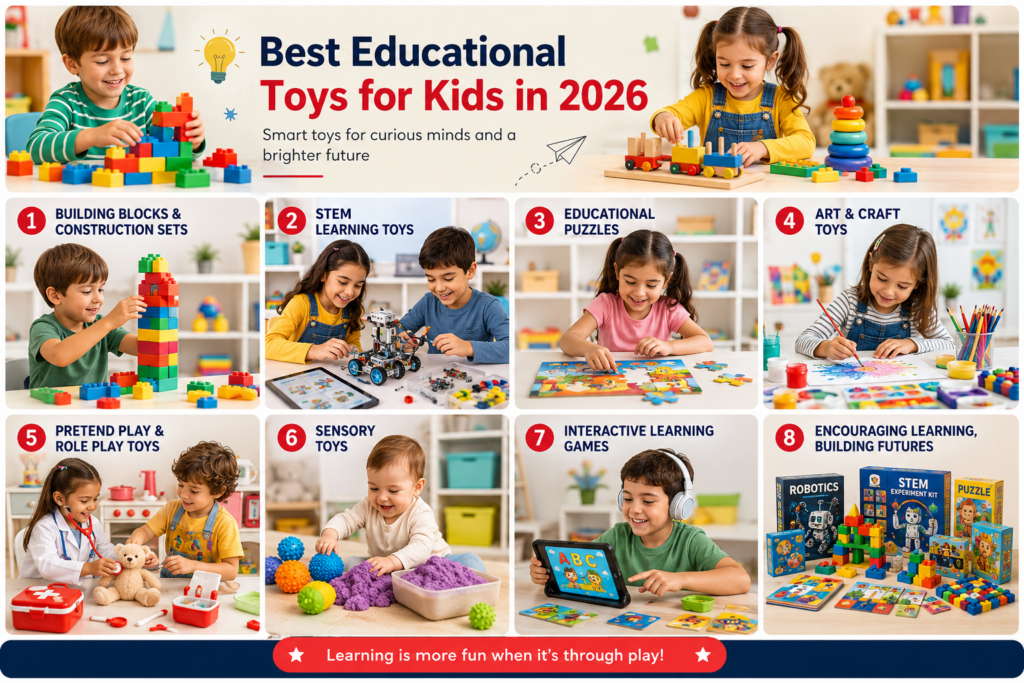
Building Blocks and Construction Sets
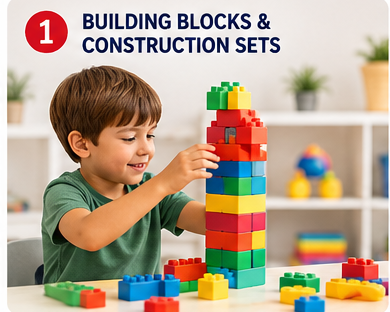
Building toys remain one of the best educational toys for kids in 2026. These toys help children understand shapes, balance, patterns, and spatial awareness.
Benefits
- Develop logical thinking
- Improve fine motor skills
- Encourage creativity
- Teach basic engineering concepts
Children can spend hours creating towers, bridges, and imaginative structures while learning valuable problem-solving skills. Building activities have been linked to stronger cognitive development and creativity.
STEM Learning Toys
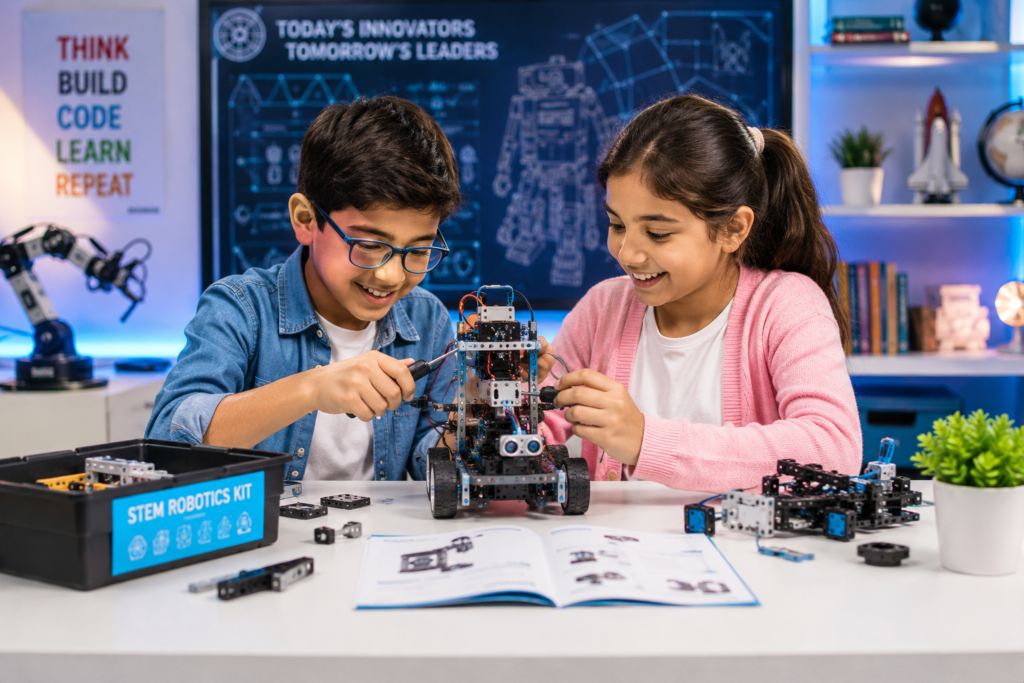
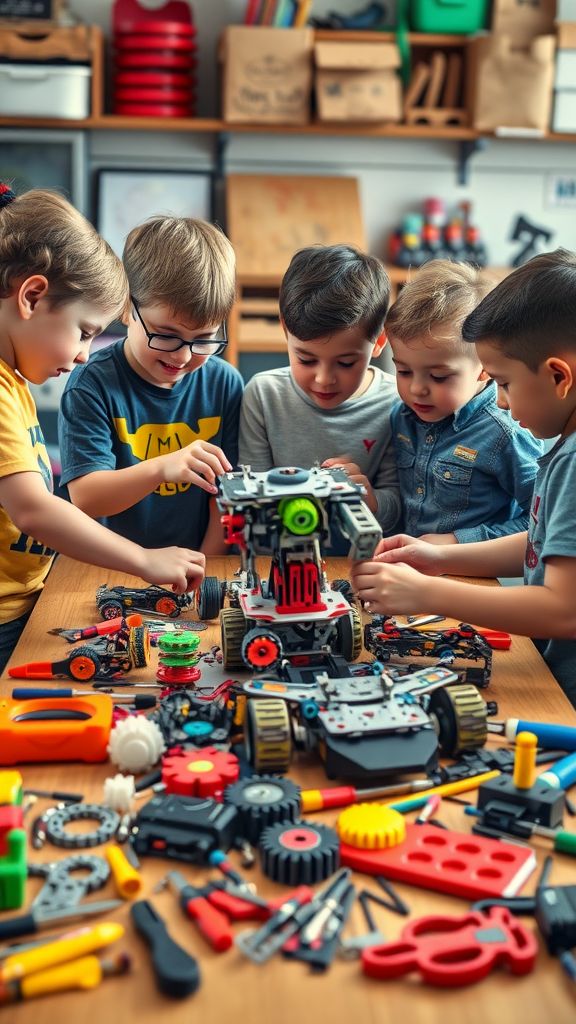
STEM stands for Science, Technology, Engineering, and Mathematics. STEM toys are designed to make learning these subjects exciting and engaging.
Popular STEM Toy Types
- Robotics kits
- Coding games
- Science experiment kits
- Engineering sets
These toys encourage critical thinking and prepare children for future technology-driven careers. Studies indicate that structured play activities such as robotics and puzzles can significantly improve cognitive skills and problem-solving abilities.
Educational Puzzles
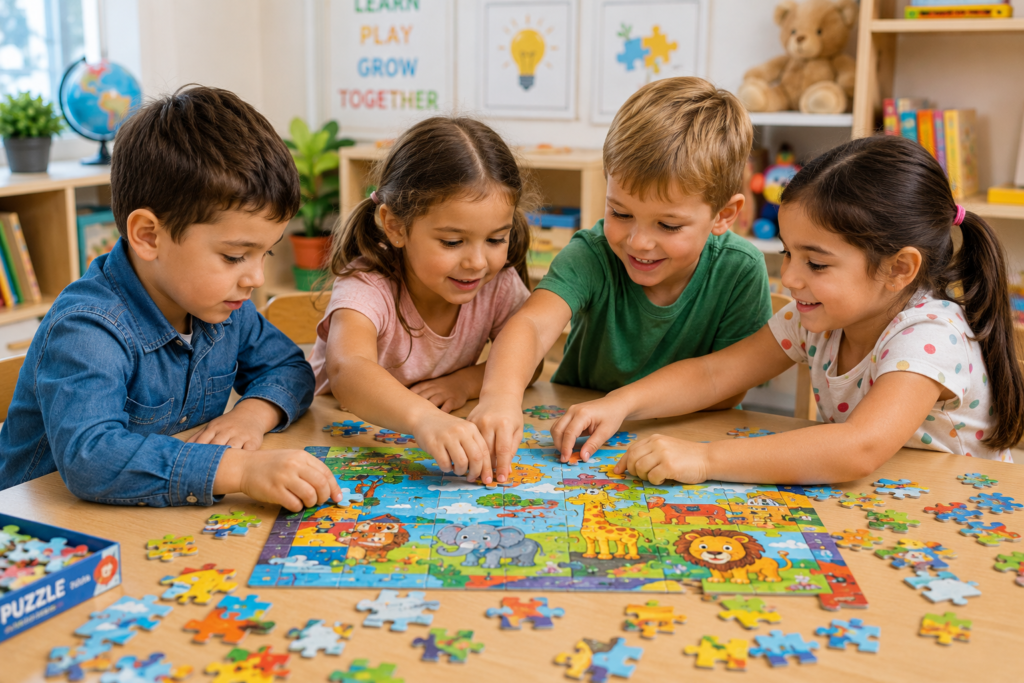
Puzzles continue to be a favorite among parents and educators. They help children recognize patterns, improve concentration, and develop patience.
Benefits
- Strengthen memory
- Improve attention span
- Enhance logical reasoning
- Build confidence
From alphabet puzzles for toddlers to advanced jigsaw puzzles for older children, puzzles offer age-appropriate learning opportunities
Creative Art and Craft Toys
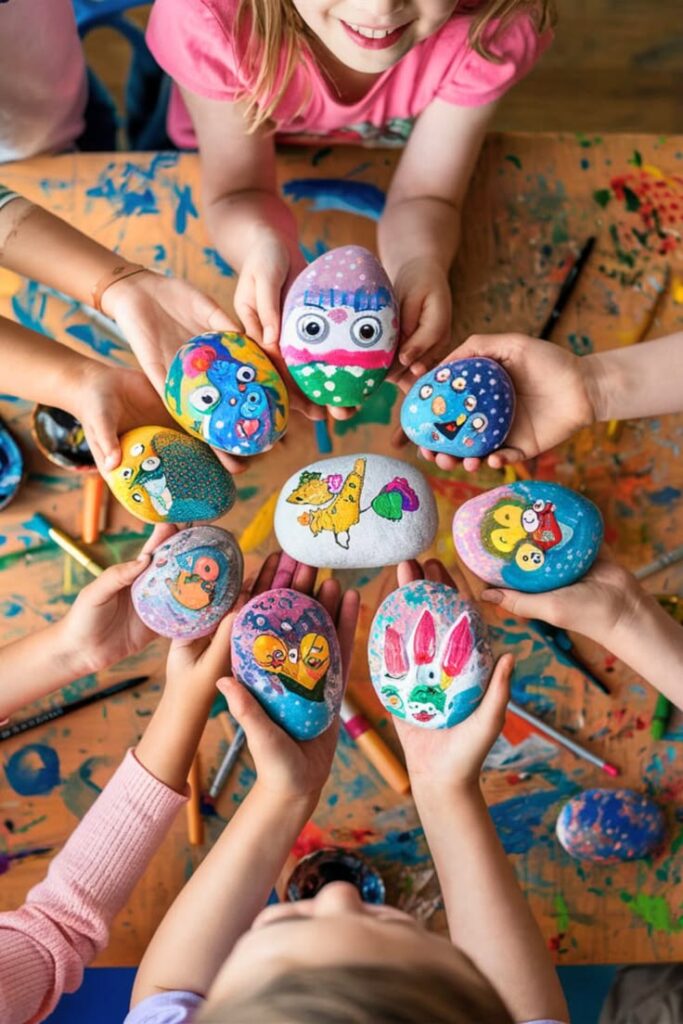
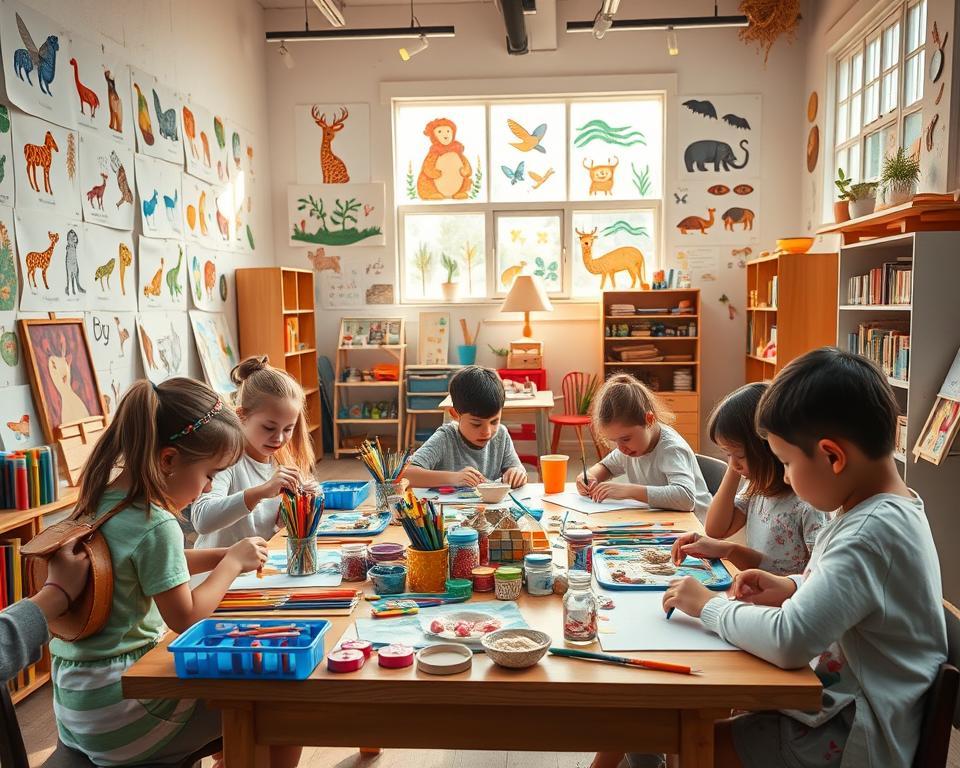
Art-based toys encourage self-expression and imagination. Drawing kits, painting sets, clay modeling kits, and DIY craft projects are excellent choices for children who love creating.
Why Kids Love Them
- Freedom to express ideas
- Hands-on learning
- Development of fine motor skills
- Encouragement of creative thinking
Creative activities support whole-brain development and help children build confidence in their abilities.
Pretend Play and Role-Playing Toys
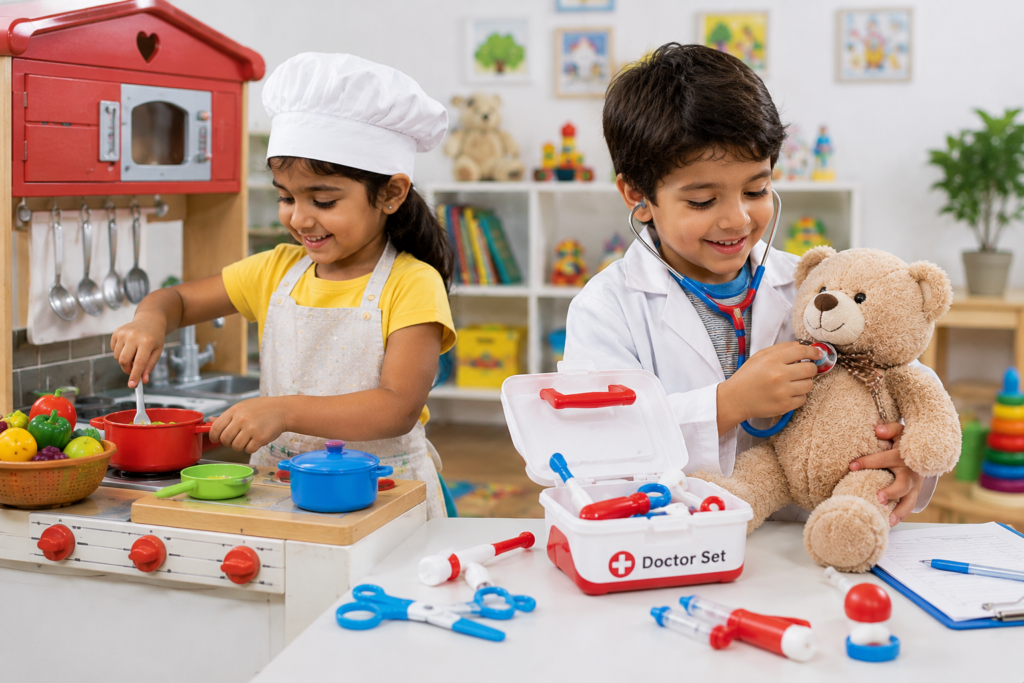
Pretend play allows children to explore different situations and roles. Toys such as kitchen sets, doctor kits, tool kits, and dollhouses encourage imaginative play.
Benefits
- Improves communication skills
- Builds emotional intelligence
- Encourages teamwork
- Supports language development
Experts consider pretend play an essential activity for childhood development because it helps children understand emotions, relationships, and real-world situations.
Sensory Toys
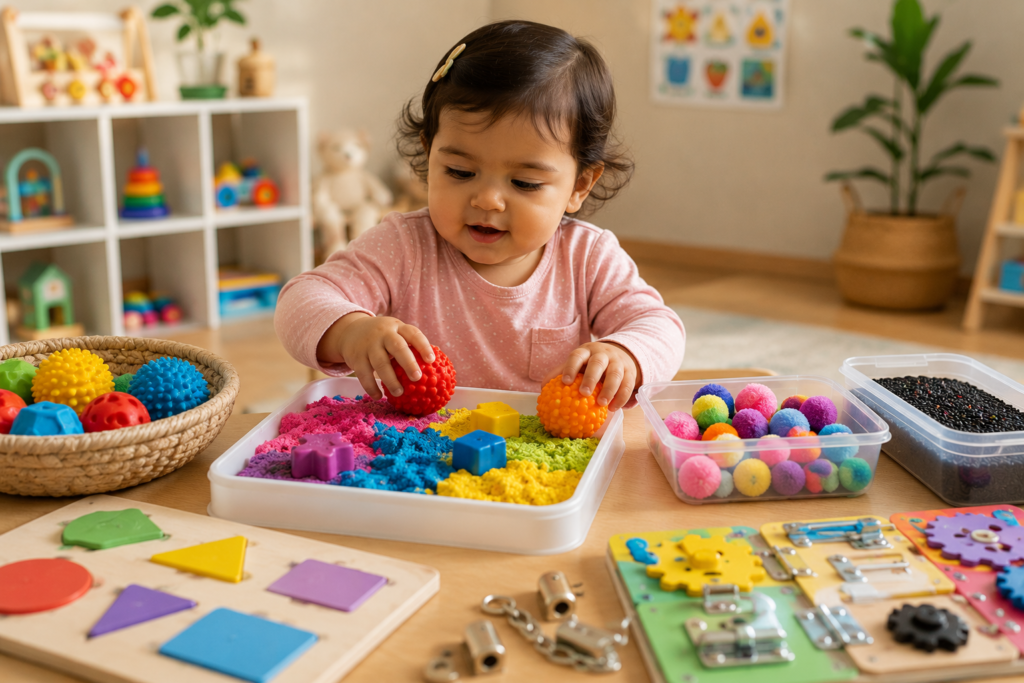
Sensory toys are designed to stimulate a child’s senses through textures, sounds, colors, and movement.
Examples
- Sensory balls
- Kinetic sand
- Busy boards
- Fidget toys
Sensory toys can help children develop focus, coordination, and sensory processing skills while providing a calming and engaging play experience.
Interactive Learning Games
Interactive educational games are becoming increasingly popular in 2026. These toys combine learning with active participation.
Skills Developed
- Math skills
- Vocabulary building
- Memory improvement
- Critical thinking
The best interactive learning toys encourage children to participate rather than simply watch, making learning more engaging and effective.
Choosing the Right Educational Toy
When selecting educational toys, consider the following:
Age Appropriateness
Choose toys designed for your child’s age and developmental stage.
Safety
Look for high-quality materials and age recommendations.
Open-Ended Play
The best educational toys allow children to use their imagination in multiple ways.
Child’s Interests
A toy that matches a child’s interests will keep them engaged longer.
Educational experts emphasize that open-ended and play-based experiences are often more beneficial than rigid learning activities.
Educational Toy Trends in 2026
Several trends are shaping the educational toy industry:
- STEM and coding toys
- Hands-on science kits
- Creative building systems
- Eco-friendly educational toys
- Sensory learning products
- Interactive storytelling toys
Parents are increasingly choosing toys that promote creativity, critical thinking, and real-world skills rather than passive entertainment.
Final Thoughts
The best educational toys for kids in 2026 are those that make learning enjoyable. Building blocks, STEM kits, puzzles, sensory toys, role-playing sets, and creative craft kits all offer valuable learning opportunities while keeping children entertained.
At Tiny Huzz, we believe that every toy should inspire curiosity, creativity, and confidence. By choosing educational toys that match your child’s interests and developmental stage, you can help them learn essential life skills while having fun.
FAQs
What are educational toys?
Educational toys are toys designed to support learning, creativity, problem-solving, and skill development through play.
Which educational toys are best for toddlers?
Building blocks, sensory toys, shape sorters, and simple puzzles are excellent choices for toddlers.
Are STEM toys worth buying?
Yes. STEM toys help children develop critical thinking, problem-solving, and technology-related skills.
How do educational toys help child development?
They support cognitive, social, emotional, language, and physical development through interactive learning experiences.